[Lecture - OS] 02. Hardware
[Lecture - OS] Hardware
Agenda
- Computer Systems Architecture
- Interrupt Mechanism
- Hardware Protection
1. Computer Systems Architecture
Components inside Computer
Processing Unit (Control/ALU)
- 프로그램의 지시에 따라 여러 요소들을 제어하기 위한 processor의 요소다.
Memory
- 동작하는 program이나 data를 보호하기 위한 storage area
Input/Output
- User-Interface Devices
- Display, Keyboard, Mouse, etc,.
- Storage Devices
- Hard disk, CD/DVD, flash, etc,.
- Network Adapters
- 다른 컴퓨터와 의사소통을 위해 존재
Data path
- 데이터 전송 및 components 끼리 동작을 위해 존재하는 Pathway.
- System interrupt나 System bus로도 불린다.
Representation of Data
Bites/Bytes
- Bit는 Binary Digit의 줄임말이다.
- n bits = $2^n$
- 1 bytes = 8 bits(size of char)
- n bytes = $2^{8 * n}$
Word
- 32bit machine 환경에서 32-bit data를 의미한다.
- 기초적인 데이터 단위다.
- Register의 크기다!
Numbers
System Bus
read/write transaction을 수행한다.
tansaction은 DB에서 더 이상 쪼갤 수 없고, 간섭이 불가능한 데이터를 의미한다.
오류가 나면 동작을 거꾸로 수행한다.(Commit or Abort)
- Computer system의 주요 components를 연결한다.
- 아래와 같은 타입이 있다.
- Data bus
- Bus master와 slave 사이 data 경로
- Address bus
- Data 전송의 target location을 특정한다.
- Control bus
- CPU로부터 명령과 devices의 contrller로부터 status signal을 운반한다.
- Data bus
- Two types of bus transaction
- Read/Write
- Read and Write를 할 때도 있지만(Multiprocessor Sync), 대부분은 bus 점유 문제 때문에 둘 중 하나만 수행한다.
Bus Arbiter
Bus master가 control bus를 통해 요청을 보내면 우선순위에 따라 grant signal을 보낸다.
- 여러 bus들의 요청 사이 충돌을 조율한다.
- Hand Shaking 과정
- Accept bus request signal
- Replies with bus grant signal
Bus Master
- Bus request signal을 통해 bus transaction을 시작할 수 있다.
- CPU
- Main memory와 CPU register 사이 데이터를 이동한다.
- DMA controller
- CPU의 도움 없이 main memory와 I/O buffer 사이 데이터를 이동한다.
Bus Slave
- Bus master가 보낸 명령을 적절하게 수행한다.
- Memory controller(memory)
- Device Controller(I/O device)
I/O Operations
기본적으로 slave다. DMA 기능을 하는 device는 master의 역할도 한다.
Performed by “I/O Controller” under CPU command
- Register 보유
- Data register : Input/Output registers
- Control register : Control(CPU command 저장)/State(flow control에 사용) register
- I/O operation은 CPU가 개시한다.
- Output operation
- Status register를 확인해 output register 사용 가능 여부를 확인
- 가능하면 데이터를 output register에 운반하고, control register에 output command를 전달한다.
- 불가능하면 가능할 때까지 process를 반복하거나 기다린다.
- Polling or Interrupt-driven I/O
- Polling: 사용 할 수 있을 때 까지 기다린다.
- Interrupt-driven: 다른 작업을 하다가 사용 가능할 때 interrupt를 발생.
- Output operation
Two types of I/O addressing
- Memory-mapped I/O
- I/O register가 memory location에 할당.
- Memory와 I/O address가 같은 address bus를 사용.
- Input/Output을 위한 Load/Store
- Port-mapped I/O
- Port는 I/O controller 내부 register.
- I/O devices는 여기에 읽고 쓴다.
- 특별한 adapter가 중간에서 조율한다.
DMA(Direct Memory Access)
DMA
- Buffer storage와 main memory에 CPU의 개입 없이 device controller가 직접 데이터의 block을 전송할 수 있다.
- byte 단위가 아닌 block 단위로 interrupt가 발생한다.
- High-speed I/O devices가 memory에 정보를 빨리 전송하기 위해 쓴다.
2. Interrupt Mechanism
Interrupt는 asyn한 event를 알리는 역할을 한다.
Basics
Interrupt
- ISR(Interrupt Service Routine)에 제어를 넘기기 위한 “hardware mechanism.”
Types of Interrupts
- Hardware Interrupt
- Hardware signal로 발생한다.
- Async
- Software Interrupt(trap)
- Error나 instruction에 의해 발생한다.
- Sync
OS is interrupt driven
- Interrupt가 발생하면 OS가 control을 가져온다.
Interrupt Operation
Interrupt Mechanism
- At the time of Interrupt
- 프로그램을 중단한다. (PC 교체)
- 프로그램의 address를 저장한다. (Register 값을 stack memory에 저장)
- ISR에 맞는 IRQ(Interrupt ReQuest) number와 interrupt vector table(hashing table이다)의 주소를 가져온다.
- ISR로 jump한다.
- While Interrupt is being processed
- 우선순위가 같거나 낮은 Interrupt를 disable한다.
- After the execution of ISR
- 저장된 주소(중단된 프로그램)로 돌아간다.
Interrupt Hardware
Interrupt destination
- Microprocessor는 IRQ(input pin의 일종)를 가지고 있어 주의가 필요한 시스템 내부 다른 핀을 알 수 있다.
- Hardware의 signal로 Interrupt를 시작한다.
Interrupt source
- I/O chip은 service를 요청하기 위해 assert할 수 있는 pin을 가지고 있다.
PIC (Programmable Interrupt Controller)
Circuilt 내부 register 값 변경으로 동작을 바꿀 수 있다.
- Interrupt-driven system 환경 내부를 전반으로 관리한다.
- IRQ pins의 number보다 I/O devices를 지원한다.
PIC Operation
- IRQ lines로 signal 발생 여부를 확인한다.
- IRQ line에 signal이 발생하면 아래와 같이 동작한다.
- Signal을 받아 적절한 vector로 전환한다.
- Vector를 interrupt controller I/O port에 저장해 CPU data bus를 이용해 알아챌 수 있도록 한다.
- Processor에게 signal을 보내 interrupt를 발생한다.
- CPU가 PIC I/O port에 적힌 signal을 인식할 때까지 기다린다.
- 인식하면 INTER line을 정리한다.
- 다시 signal을 기다린다.
3. Hardware Protection Mechanisms
한 작업의 수행이 다른 작업들에 영향을 주지 않도록 한다.
Four Hardware Protection Mechanism
- Basic Mechanism : Dual mode operation
- I/O protection
- Memory protection
- CPU protection
1. Dual Mode Operation
Motivation
- System resource 공유 시 OS는 다른 프로그램 간 간섭으로 부적절한 동작을 하지 못하도록 해야 한다!
Key Idea
- 최소 두 가지 mode로 hardware를 지원하자!
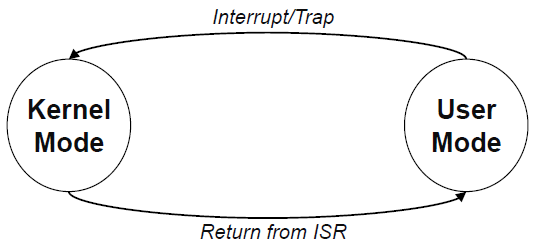
- User Mode
- User가 실행할 수 있다.
- Kernel Mode (System / Monitor mode)
- OS가 실행된다.
- Kernel mode 실행 중 OS는 kernel과 user memory에 무제한으로 access할 수 있다.
- User Mode
- PSR(Processor State Register) 내부 Mode bit이 추가된다.
- 0: kernel mode
- 1: User mode
- Interrupt나 trap이 발생하면 hardware는 kernel mode로 즉시 전환한다.
- Kernel mode에서만 동작하는 Privileged Instruction을 제공한다.
System call
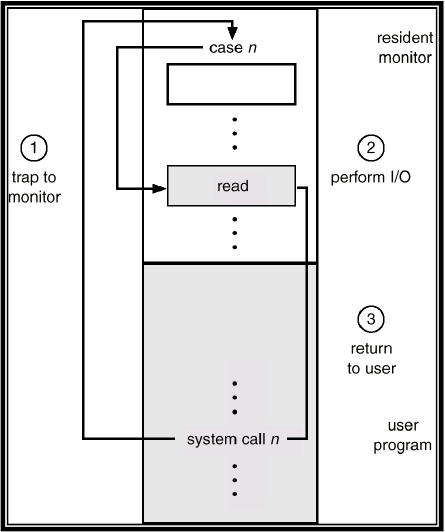
- 사용자 프로그램이 kernel mode 내부 kernel function을 호출할 수 있는 방법.
- Mode의 전환이 일어난다.
- Function call과 비슷하다.
System call handling
2. I/O Protection
Motivation
- I/O devices 독점 방지.
Key Idea
I/O controller의 register는 user mode에서 접근이 불가능하다. Memory mapped I/O는 해당 memory를 protect한다.
- 모든 I/O Instruction은 privilaged Instruction이다!
- 사용자 프로그램이 kernel mode인 컴퓨터의 control을 절!대! 얻을 수 없다.
- 얻으려 하면 exception 발생
3. Memory Protection
Motivation
- 정의된 범위 밖에서 memory 접근 방지.
Key Idea
- 사용할 수 있는 address를 정의하기 위해 두 register 사용.
- Base register
- Bound register
- Base/Bound register를 load하는 것은 Privileged instruction이다.
4. CPU Protection
Motivation
- CPU가 독점 되는 것을 방지한다.
Key Idea
- OS가 control을 유지할 수 있도록 특정 주기마다 interrupt를 발생하는 timer를 만들자.
- Timer register를 만들어 해당 processor의 CPU 가용시간이 넘어가면 interrupt.
- Timer register를 load하는 것은 Privileged instruction이다.
This post is licensed under CC BY 4.0 by the author.